The rapidly changing market is affecting prices of Japanese art and accordingly the habits of collectors across the globe, but high quality lots are still fetching good results across all categories. Satsuma pottery is an excellent example of this trend, as it has been a favourite pick among the Western collectors for over a century. The recent tariffs are making American collectors think twice before they buy in Europe, and the Europeans are more picky when it comes to condition. These shifts in tastes appear to put more favourable light on later pieces with unusual form, size, or more painterly qualities.
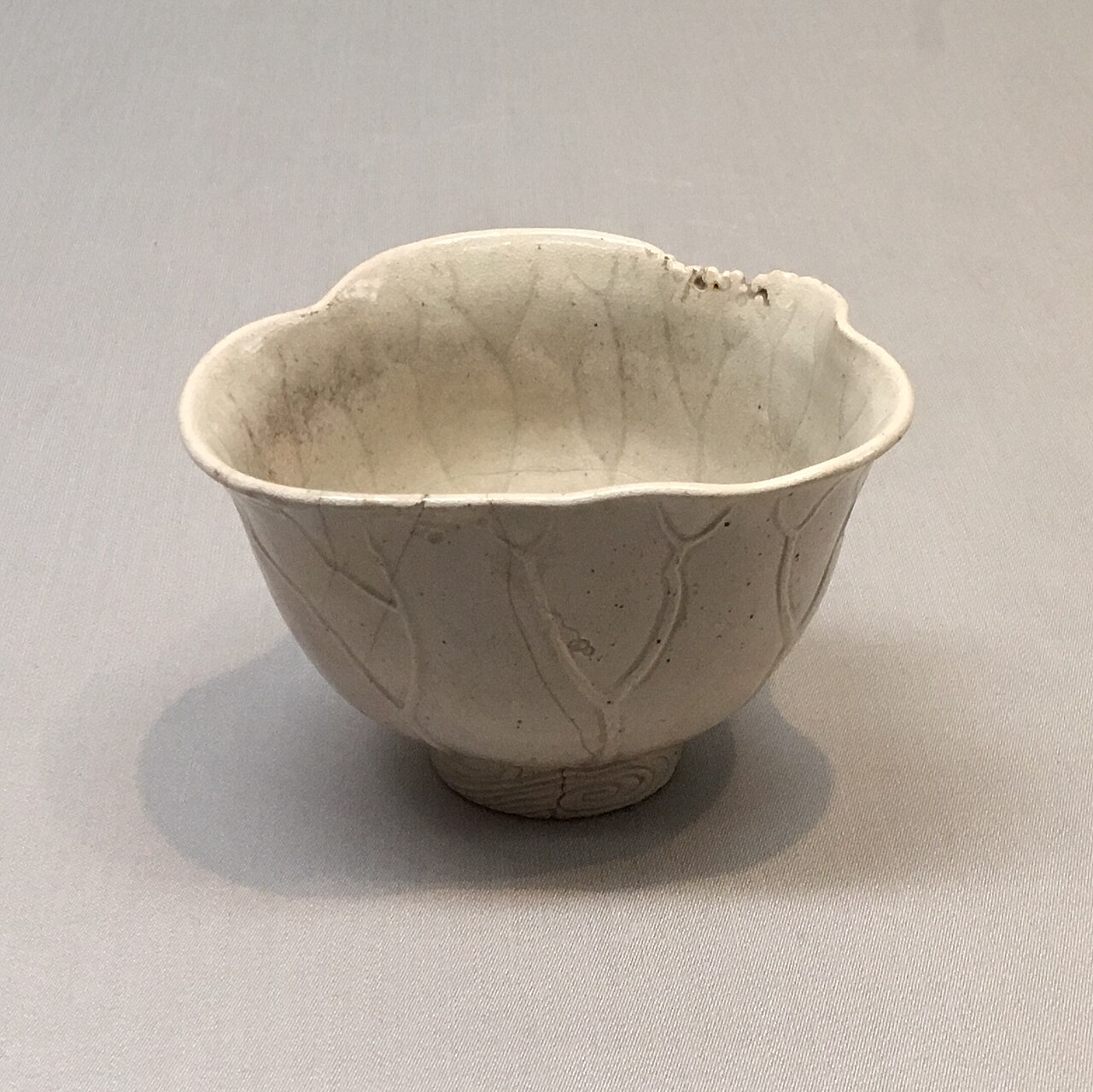
Let’s start with a bit of history. The production of Satsuma pottery developed in the early 17th century with Korean artisans setting up kilns in Kyushu and working with local clay. The first pieces were simple, thickly glazed tea ceremony utensils of very much utalitarian function, not very different from what could be found on the continent. Around 1800 the typical creamy, crackle-glazed body became typical and colourful glaze and gilding were introduced.
An early Satsuma tea bowl, Edo period, circa late 17th century, in the shape of a lotus leaf, stoneware with a white slip and clear glaze. Exhibited in the Tokyo National Museum, collection reference no. G-14. Image via Wikimedia Commons.
By the time Japan opened to the outside world, and the country presented its arts and crafts at the parisian Exposition Universelle in 1867, the success of Satsuma was already determined. Multiple workshops, now more and more specialised, opened across the country including Kyoto, Tokyo, Kobe and Yokohama. Thus the term Satsuma became synonymous with a type of wares, not a geographical kiln. Painters such as Kinkozan or Yabumeizan became household names and their works are still highly sought after. Increasing demand resulted in decreasing quality, and at the turn of the century not even employing famous woodblock print artists like Kono Bairei to provide innovative designs could save the ‘brand’ Satsuma pottery became. By the late 1930s the perception of Satsuma pieces was more akin to souvenirs than unique, intrinsically valuable artworks.
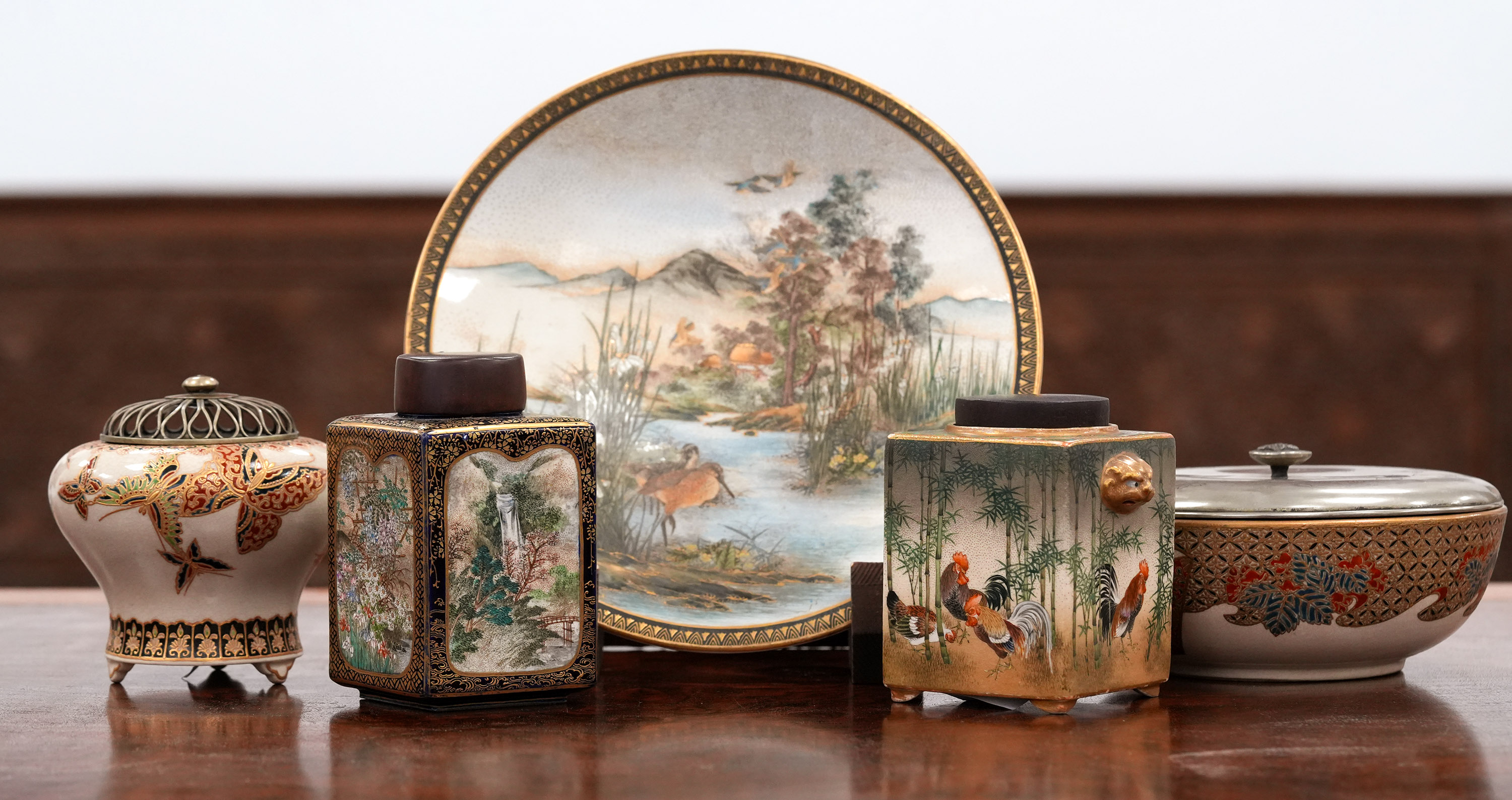
This small group of high quality examples from Satsuma workshops, which can be found in our upcoming spring Arts of Asia sale, presents an excellent cross section of the best that later Meiji period Satsuma workshops had to offer.
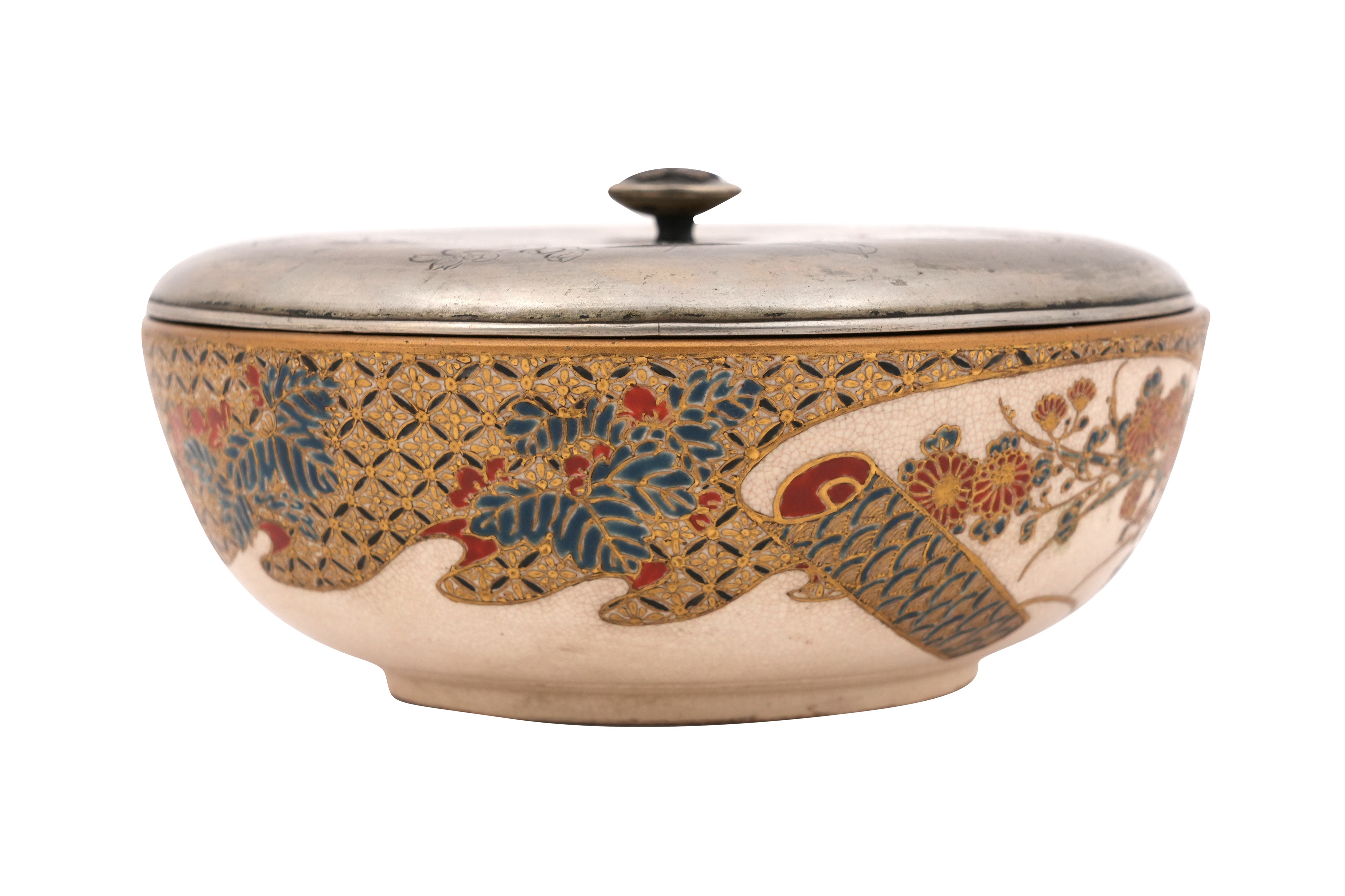
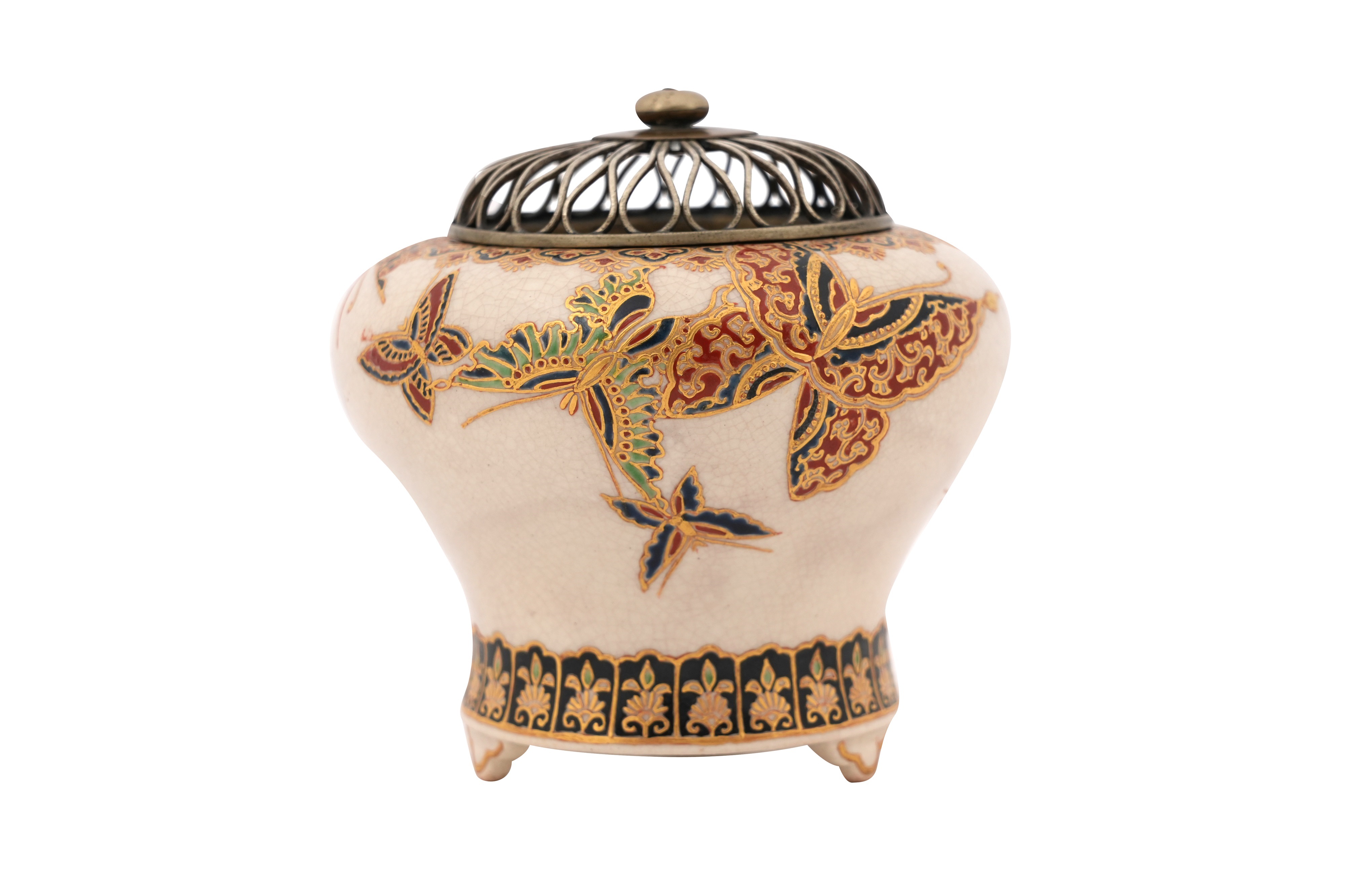
The first and earliest examples are two pieces of Gosu Satsuma: an incense burner and a bowl. The thickly applied dark blue (ranging from grey-blue to almost black) and red glaze combined with lavish gilding pops out from the ground in a style called moriage, giving the decoration more of a 3D quality. The designs are simpler and more abstract, often inspired by brocade textiles. This type used to be called ‘Imperial Satsuma’ by the 19th and early 20th century merchants.
A Gosu Satsuma Bowl and a Gosu Satsuma Incense Burner and Cover
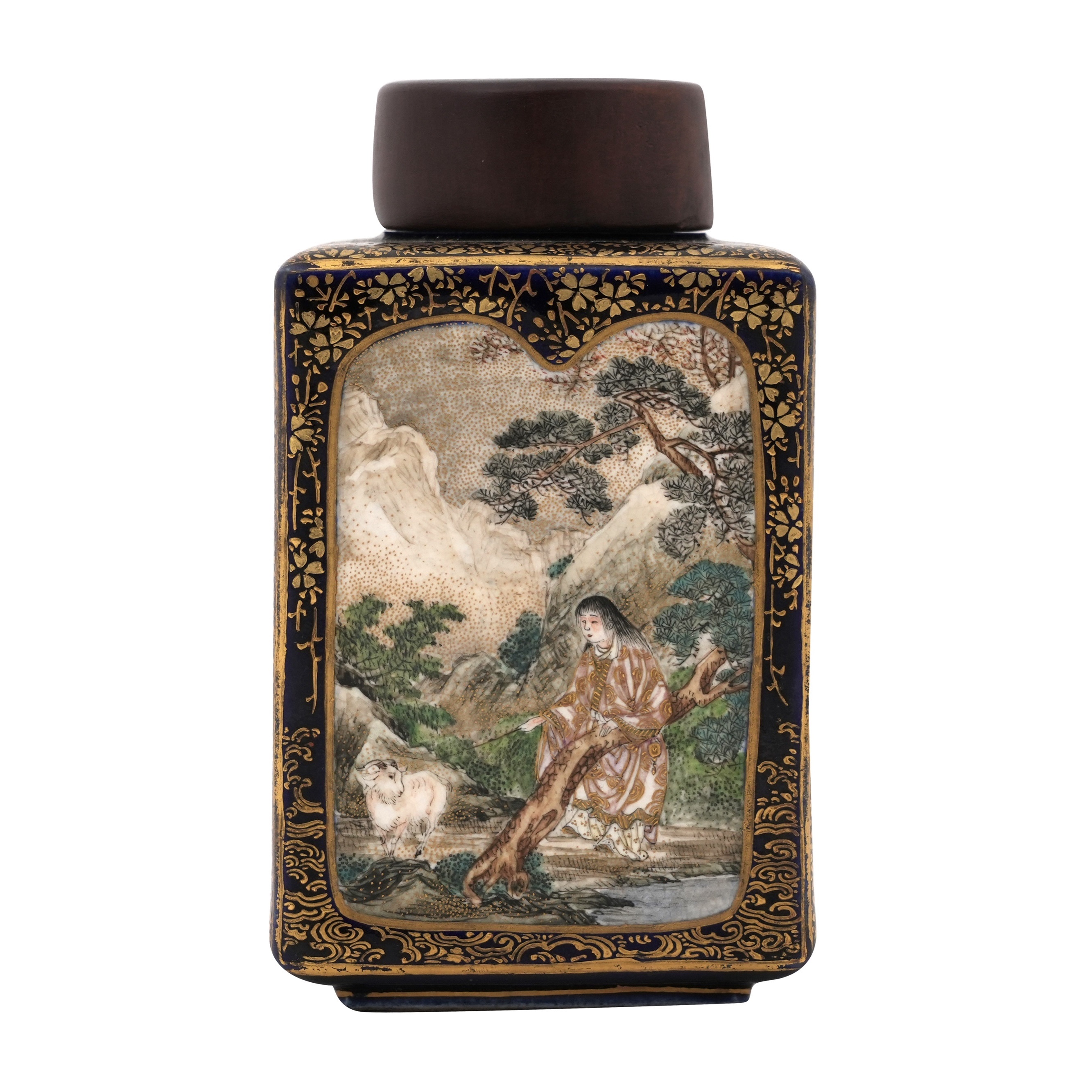
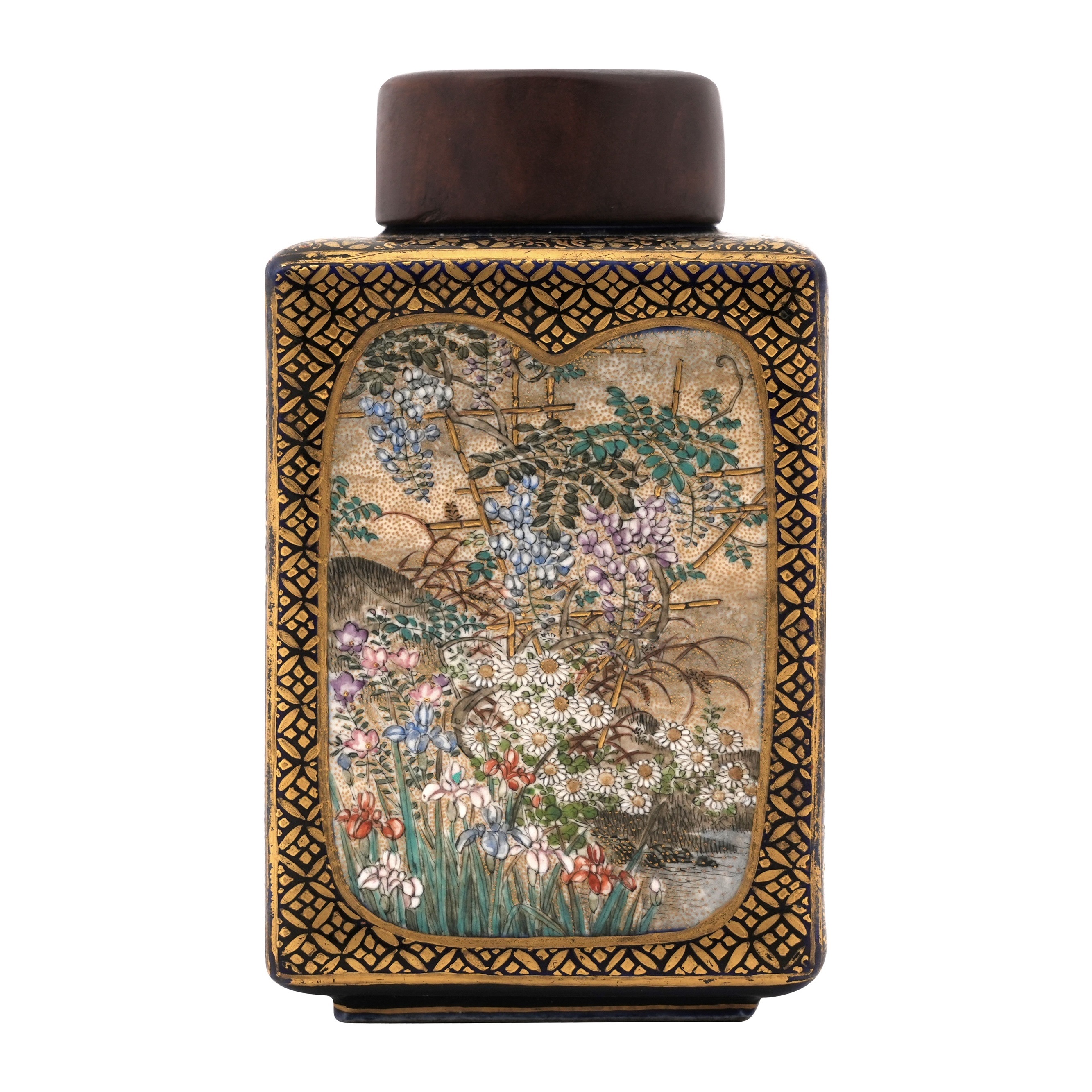
The second type is exemplified with another small tea caddy, again with a Kinkozan mark. The sides have been painted with wild blossoms, figures and landscapes, using a brush as fine as a a single hair. In this case, the typical cream body with fine network of crackles is coated with dark cobalt blue glaze, decorated on top with miniscule blossoms and fine cash pattern. This is different to the Gosu glaze, which is much less transparent and of different origin. The pigment comes from the imported cobalt oxide and as many other chemical dyes which became available at the very end of 19th century, changed the aesthetics of the art exported to the West in the later stage of Meiji period.
A Miniature Satsuma Tea Caddy, Kinkozan Workshop
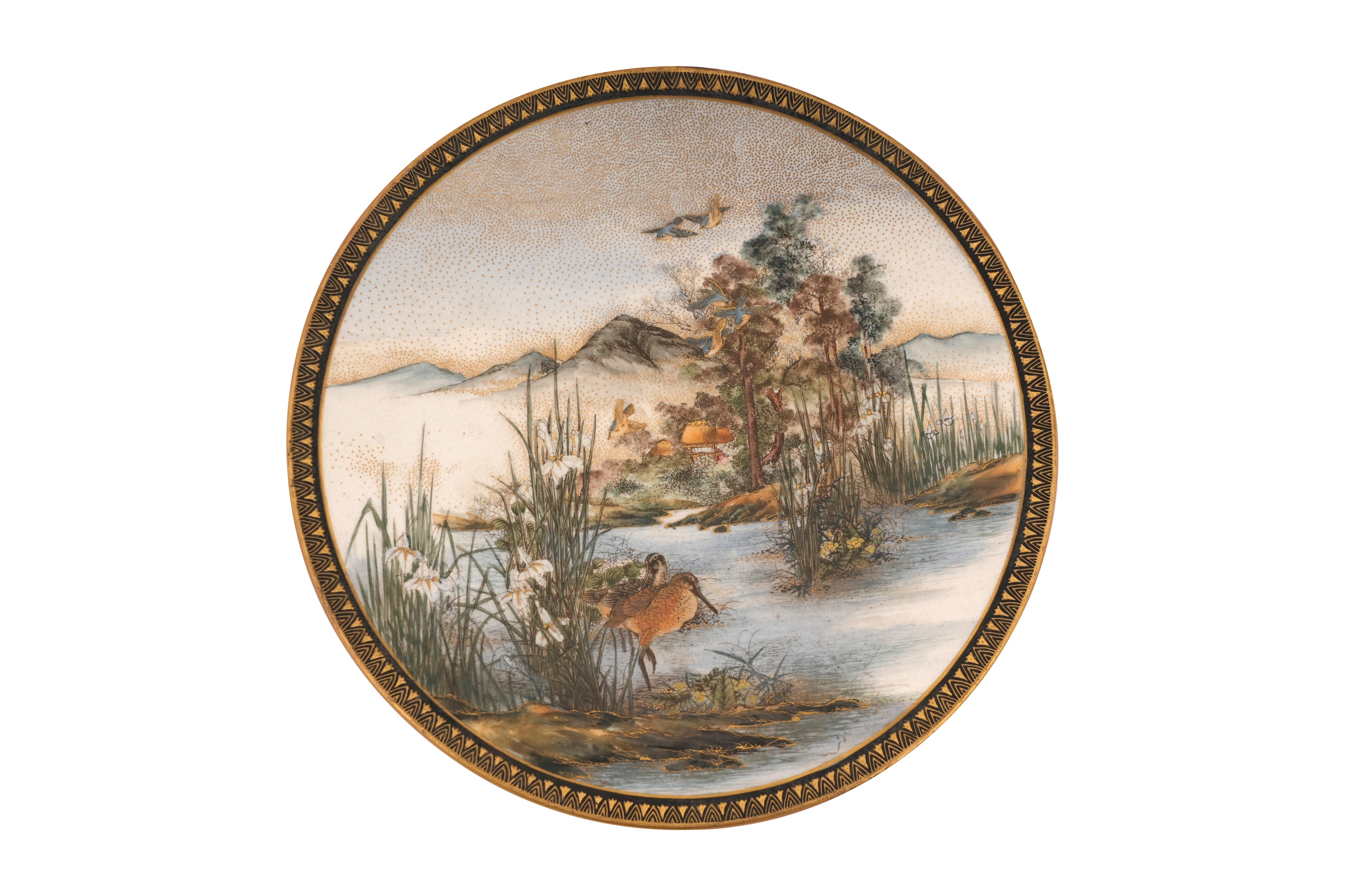
Another two pieces feature naturalistic studies of nature: a dish with an Eizan mark, depicting birds in their natural habital, and a small tea caddy is sealed Kinkozan, with delicately painted landscapes and flowers. The environment
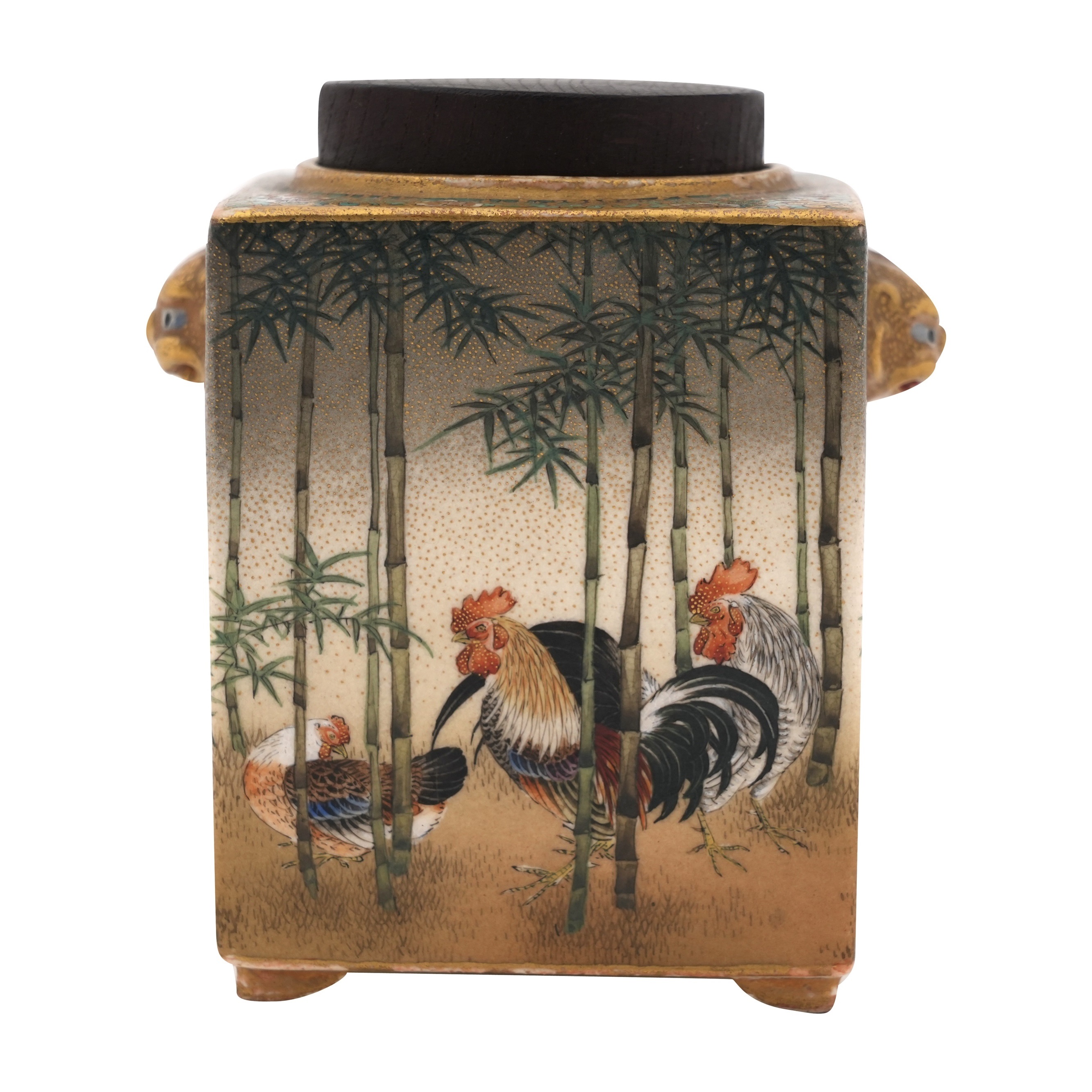
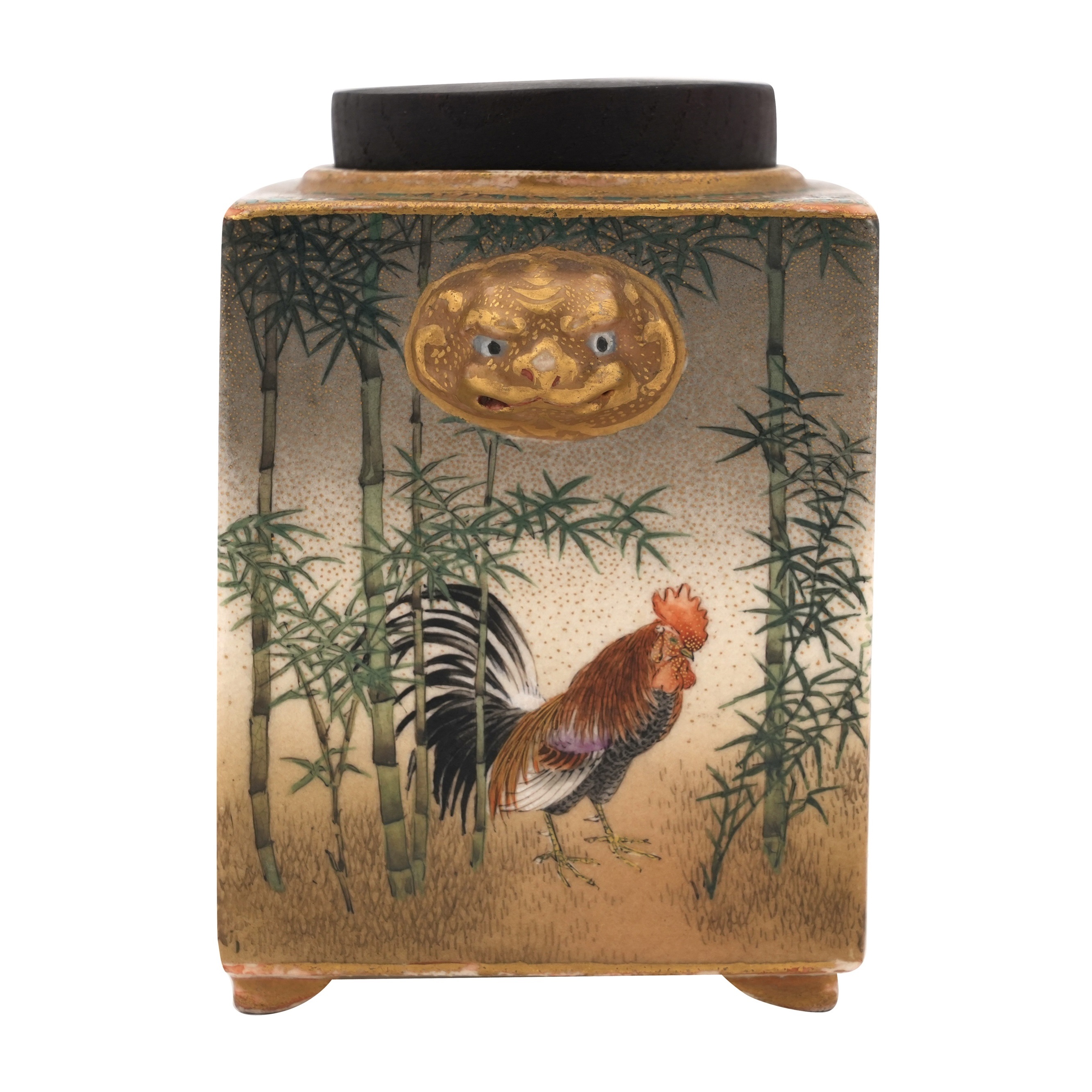
Another two pieces feature naturalistic studies of nature. The small tea caddy, sealed Kinkozan, together with a dish with an Eizan mark, depict birds in their natural habitat. The landscape and animals are highly realistic and detailed, apart from the haze of gilt spots which typically feature in later Meiji Satsuma ware but were very much inspired by the earlier Kano school of painting.
A Satsuma Miniature 'Chickens' Tea Caddy, Kinkozan Workshop
A Japanese Satsuma Dish by Eizan
This school dominated Japanese painting from the late 15th century up until the mid 19th, and united the emphasis on brushwork found in classical Chinese scholarly painting with minute decorative detail and bright colours.
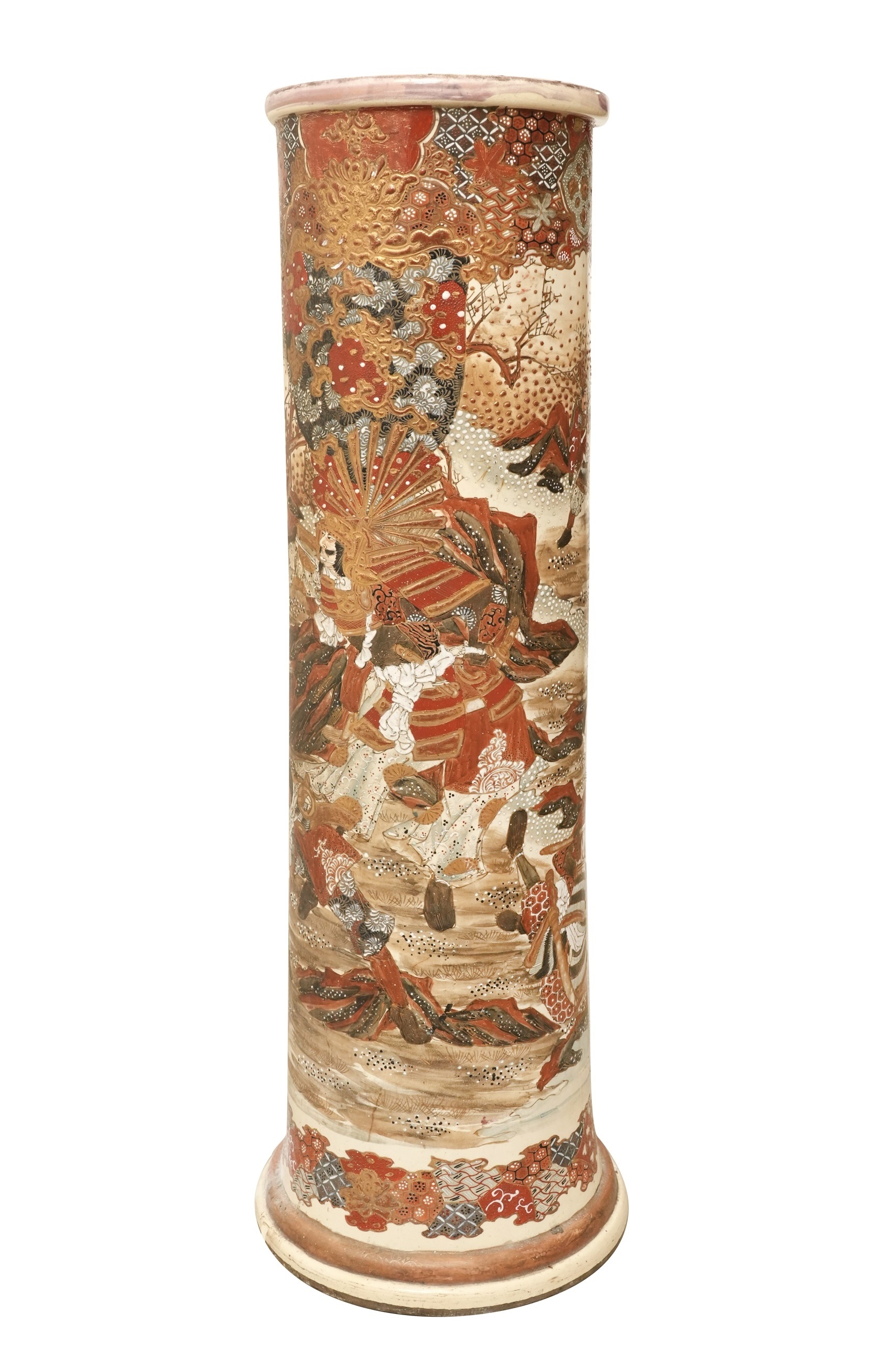
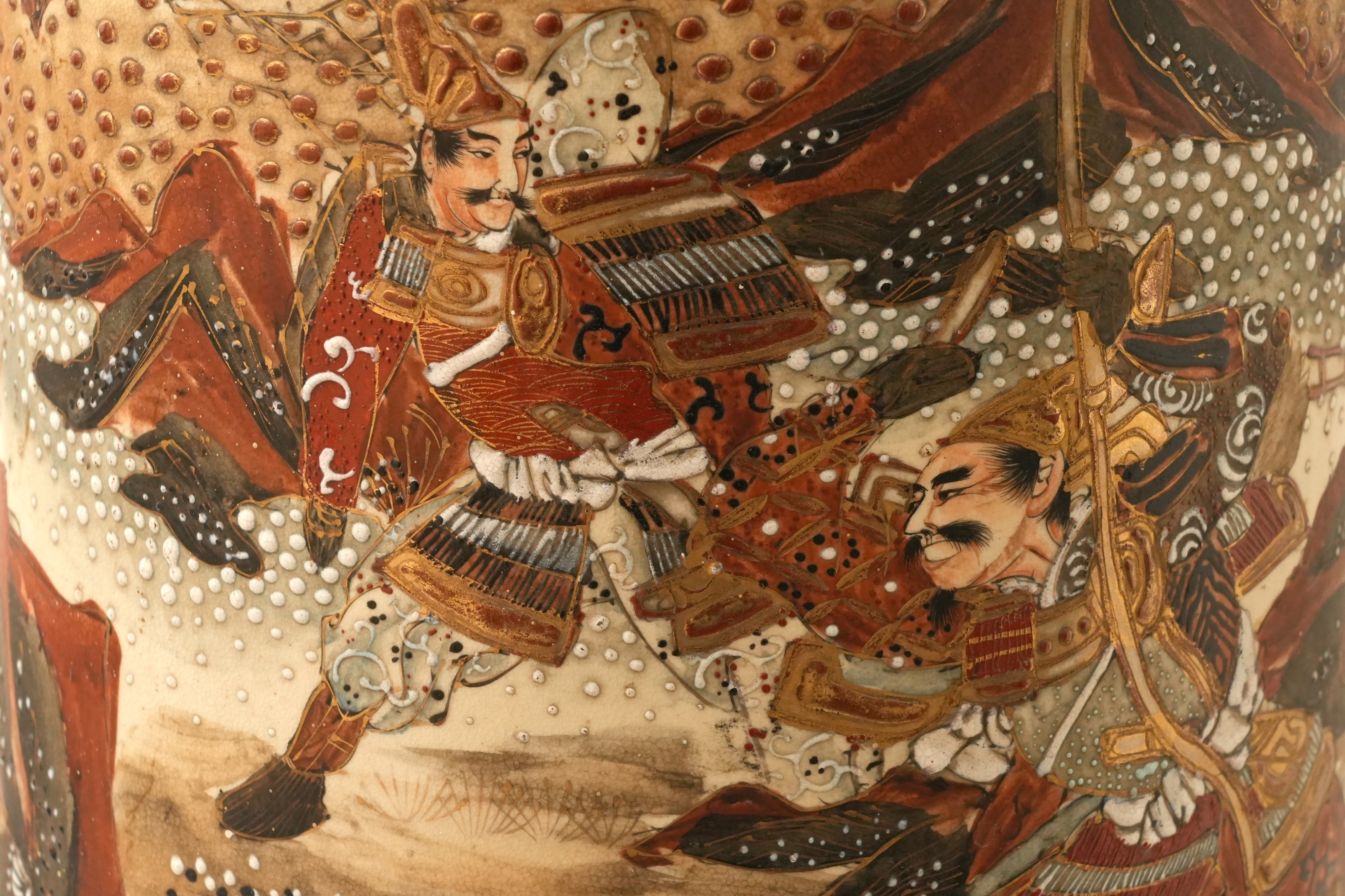
The last piece, a planter stand, is huge in comparison and possibly as late as 1930s. Compared with those previously presented pieces, this style of decoration is very different. The dynamic scene of a battle involving Samurai in full armour is an attempt at giving the Western buyers the image of an idealised Japan: a land populated with fearsome warriors following ancient traditions not to be understood, but merely enjoyed aesthetically. The elements from the previous styles are still present: the patches of brocade pattern and the gilt ‘snow’, but executed with much less care and attention. Despite it lacking the incredible detail of the earlier examples, this piece has a certain appeal of immediacy and dynamism, with arms and armour faithfully depicted, and a clear utalitarian function.
An Early 20th Century Large Satsuma Planter Stand
Through analysing these varying manifestations of the Satsuma style, it is clear why it remains one with enduring appeal to collectors: from the comparative simplicity of early 'Imperial Satsuma', to the bold and fantastical scenes found on late wares to appeal to the Western market. We are pleased to offer all of the mentioned examples in our upcoming Asian Art auction, titled Millefleurs, Thousand Blossoms: Arts of Asia.
If you have any questions regarding the sale, or have any pieces you would like to consign, reach out to Marta directly via marta@azcaauctions.com